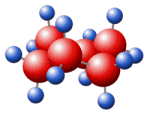
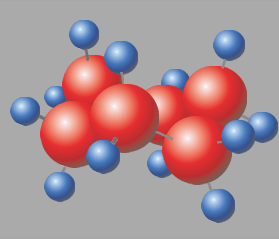
Molecular Weight: 356.36
Molecular Formula: C20H20O6
Canonical SMILES: CC1CC2C3C(C1C)C4=CC5=C(C=C4OC36C(=CC2=O)OCO6)OCO5
InChI: InChI=1S/C20H20O6/c1-9-3-11-13(21)5-17-20(25-8-24-17)19(11)18(10(9)2)12-4-15-16(23-7-22-15)6-14(12)26-20/h4-6,9-11,18-19H,3,7-8H2,1-2H3/t9-,10+,11+,18+,19+,20+/m1/s1
InChIKey: GMTJIWUFFXGFHH-WPAOEJHSSA-N
Purity: >98%
Application: Anti-inflammatory/antibacterial
Synonyms: (5aR,7R,8S,8aR,14aS,14bR)-5a,6,7,8,8a,14b-Hexahydro-7,8-dimethyl-5H-Benzo[kl]bis[1,3]dioxolo[4,5-b:4',5'-g]xanthen-5-one; (5aα,7α,8β,8aβ,14aS*,14bβ)-5a,6,7,8,8a,14b-Hexahydro-7,8-dimethyl-5H-benzo[kl]bis[1,3]dioxolo[4,5-b:4',5'-g]xanthen-5-one
DescriptionSauchinone, coming from the herbs of Saururus chinensis(Lour.) Baill, is a useful adjunctive treatment for bacterial infection. Sauchinone inhibited oxidative stress, as assessed by stainings of 4-hydroxynonenal and nitrotyrosine: these events may have a role in its inhibitory effects on HSCs activation. Sauchinone attenuated CCl4-induced liver fibrosis and TGF-β1-induced HSCs activation, which might be, at least in part, mediated by suppressing autophagy and oxidative stress in HSCs. Sauchinone protects skin keratinocytes through inhibition of extracellular signal-regulated kinase, c-Jun N-terminal kinase, and p38 MAPK signaling via upregulation of oxidative defense enzymes.
More details are to be found on
supplier website